Every day, each German soldier was permitted to spend seven minutes with each French prisoner.


Every day, each German soldier was permitted to spend seven minutes with each French prisoner.

It was a long, narrow corridor. It smelt of chilly perspiration and dampness. Six doors were present. The final one was Room 6, which had a worn copper doorknob and was painted white. Nothing noteworthy or suggestive of the events that took place behind it. After pushing me inside, the guard shut the door. It was a little space, maybe three by four meters. A wooden chair, a high window obstructed by boards, and a narrow iron bed against the wall. The scent that stuck with me the longest was a blend of perspiration, dread, and an older scent that I'm still unable to identify.

There was already a soldier present. He was about twenty years old, blond, and had a worn-out expression on his face. He didn’t look me in the eye. "Take off your clothes," he urged in terrible French. I couldn’t move. My body was no longer mine. Observing this 20-year-old girl who was still unsure of how she got there made me feel as though I was hovering close to the ceiling. I complied with his louder repetition. I won't go into detail about what transpired next, not because I don't recall—I remember with an accuracy that still haunts me—but rather because certain things may be comprehended without words.

All I can tell is that the nine minutes was a rigid requirement, not an estimate. When the allotted time had passed, another guard knocked on the door, and the soldier walked out without saying anything or turning around. I lay on that bed for a few minutes. I gazed at what appeared to be a river-like fissure in the ceiling. In order to avoid thinking about what had just transpired or feeling my own body, I concentrated on that crack. The door then opened again. One more guard. One more soldier. Nine minutes, repeatedly. I counted seven times that day. 63 minutes total, seven troops. However, it seemed to continue forever for me.

I was unable to walk properly when they returned me to the common area. Thérèse offered me water and assisted me in lying down. She remained silent. What was there for her to say? The days that followed blended together. Calls, doors opening, footfall in the hallway, and that number—nine—were all that remained between dawn and nightfall. A few females attempted to tally the number of times they had received calls. My mind clung to everything rational or quantifiable, therefore I didn't choose to count. As if by counting, I could preserve some kind of control.

However, the waiting was worse than the minutes themselves. Hearing footsteps and wondering, "Is it for me this time?" without knowing when your name will be called Your heart stopped as you saw the door open and heard another name. And when it wasn't you, there was the awful humiliation of feeling relieved—relieved that it wasn't you and that you had a few more hours of rest until your body was once again yours. I believe that this is what they want to demolish in us: our humanity as well as our dignity. They encouraged us to think of ourselves as things, as digits on an unseen clock.
" U.S. soldiers kidnapped many Korean girls and forced them to work as prostitutes."

Anti-US propaganda and anti-Japan propaganda.
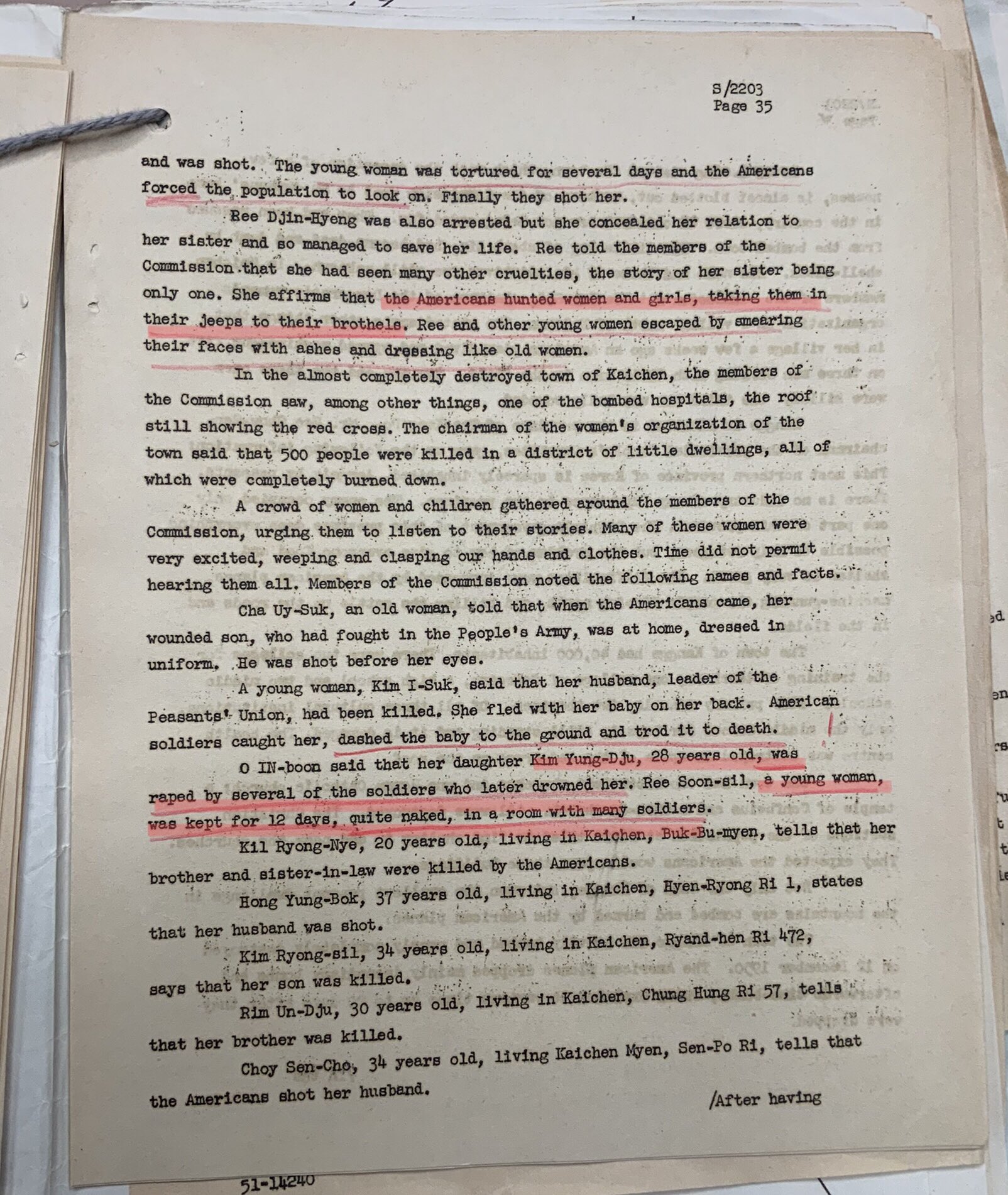
“ American hunted women and girls, taking them in their jeeps to their brothels.”
“ American tortured young women for several days.”
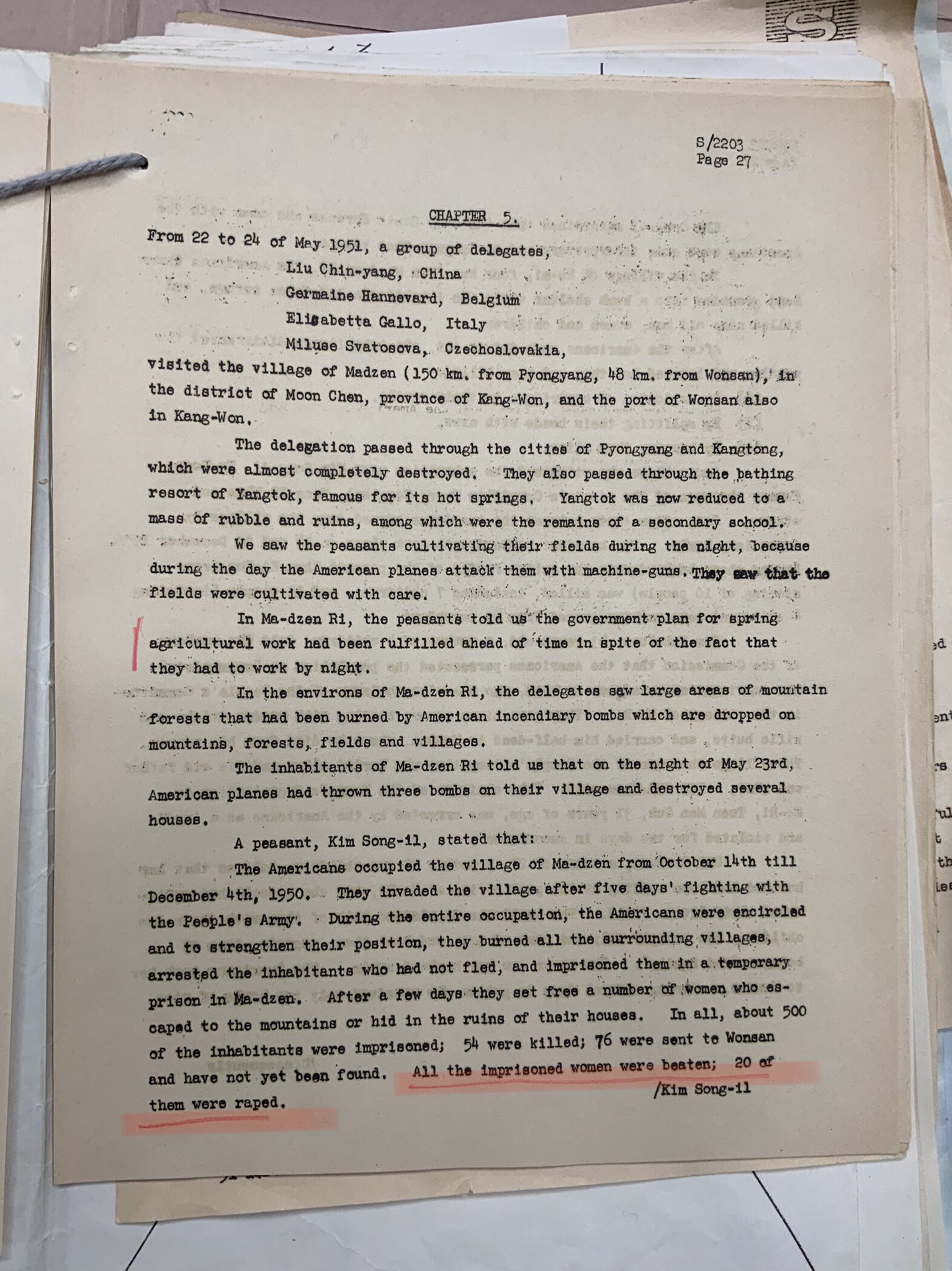
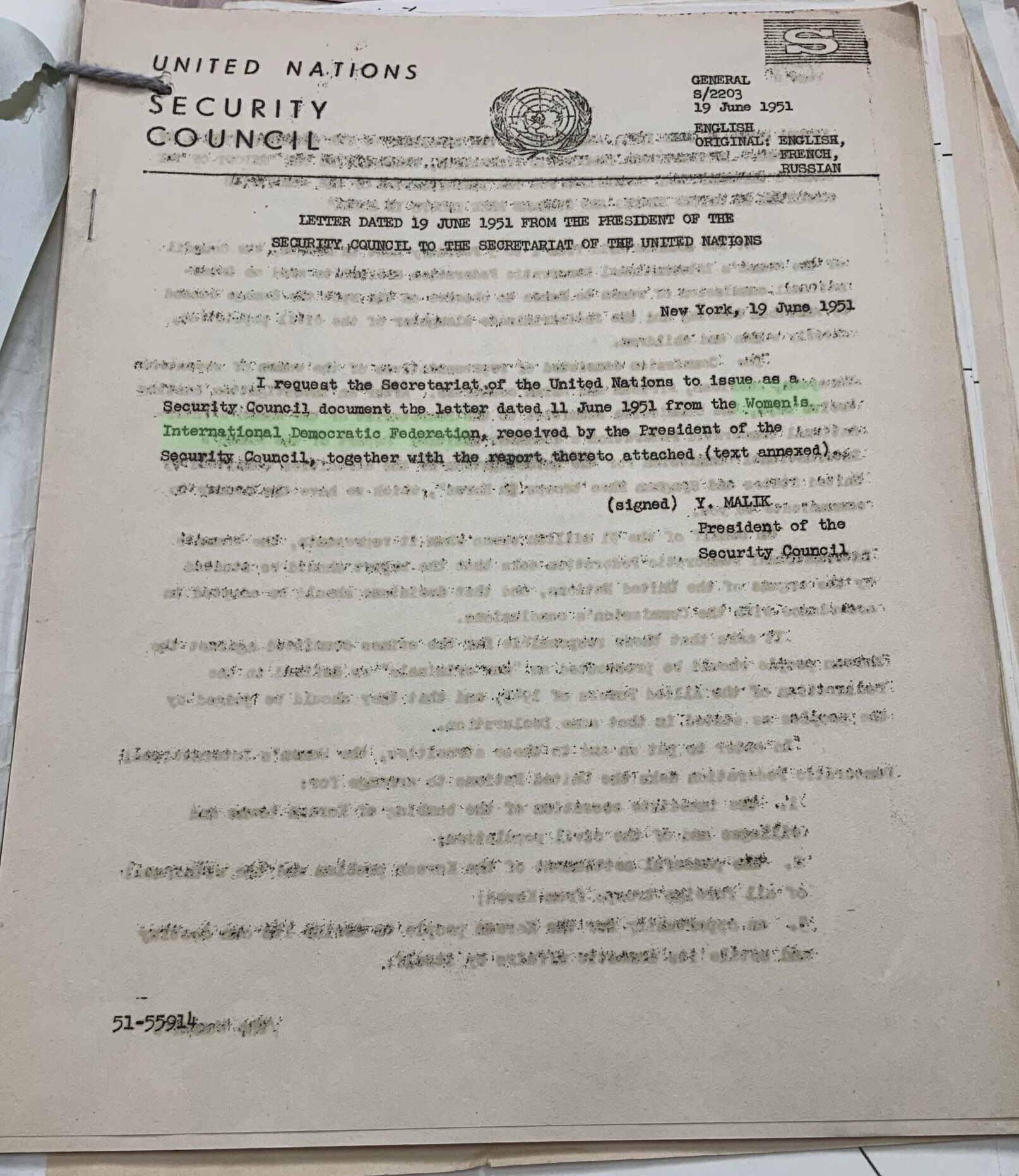
This is a report of the Women’s International Commission which was written in 1951.

This commission was known as a communist front and it states that Korean women were abducted, raped, tortured, and murdered by the US and allied forces.
According to this report, the U.S. soldiers kidnapped many Korean girls and forced them to work as prostitutes.

Image

Image

Image


Image


Image

Image

Image


Korean political propaganda

Korean political propaganda

South Korea's cruel human trafficking industry


 South Korea’s cruel Adoption Industry | Korea adoptee’s interview


ChatGPT


20:46 고사부 장관의 발언이 나옵니다 [음악] 기아비아들은 정상적인 가정교육을 받을 수 없어 사회적으로 문제가 될 사람들임으로 해외 입양을 보내야 한다는 것입니다 [음악] 정부가 해외 입양을 장려했던 것 인간 외교와 이민 확대라는 정부정책 속에서 1980년대 중반 해외 입양아동수는 정점을 찍습니다 [음악] 입양 기관들도 경쟁적으로 아동 확보에 나섰습니다 보육원과 같은 복지시설의 지원금을 주고 아이를 데려오는가 하면 [음악] 산부인과 조산홍과도 연계했습니다 이렇게까지 해서 해외 입양을 보내야 했던 이유는 무엇일까 21:51 이 병은 엄청난 돈을 벌어들이는 그런 결과가 있었죠 달러가 엄청나게 많이 들어온 거죠 제가 80년대 81년 1월부터 제 홀트에서 근무를 했었는데 1년 한 5개월 그때 하나에 보내면 3000불이었거든요 근데 제 월급이 20 몇 만원이었어요 23만원인가 한 아이를 입양 보내면 일하는이 사회복지사 연봉 한 사람 연봉보다 더 많이 나오는 거예요 비싼 입양 수수료를 받고 매의 수천명씩 아이들을 해외로 보내는 동안 입양 직원들은 점점 더 규모를 키우고 사업을 확장시켜 나갔습니다 입양 기관들의 입장은 무엇일까 At 20:46, the statement of the Minister of Social Affairs is coming [Music]. It states that children in destitution should be sent for international adoption as they cannot receive normal family education and can become a social problem [Music]. Within the government policy of humanitarian diplomacy and immigration expansion, the government facilitated international adoption, and in the mid-1980s, the number of internationally adopted children reached its peak [Music]. Adoption agencies also competitively engaged in securing children. Some provided funding to welfare facilities such as orphanages to bring children, while others collaborated with obstetrics and gynecology departments. The question is, why did we have to resort to sending children for international adoption to such an extent? [Timestamp: 20:46] At 21:51, there were tremendous financial gains from this disease. It brought in a significant amount of dollars. I worked at Holt from January 1981, and for about a year and five months, if you sent one child, it cost $3,000. But my monthly salary was around 200,000 won, I think 230,000 won. So, adopting and sending one child earned more than the annual salary of a working social worker. While receiving expensive adoption fees and sending thousands of children overseas, adoption agency staff grew in size and expanded their operations. What was the perspective of adoption agencies? [Timestamp: 21:51]


[음악] 너무 늦게 만나 엄마와 딸은 서로에게 못다한 이야기가 너무 많습니다 [음악] 우리나라는 지금도 한 해 200명 이상의 아이들을 해외로 입양 보내고 있습니다 콜롬비아 우크라이나에 이어 세계의 3위 출생 아돈수를 감안하면 확고 부동한 일입니다 출산율이 가장 낮은 나라에서 여전히 가장 많은 아이들을 해외로 46:39 보내고 있는 겁니다 시사 직격은 주요 입양 기관들에게 진실을 물었지만 그들은 한결같이 책임과 답변을 회피했습니다 입양인들이 한국 정부의 요청한 신상조사 역시 아직 별다른 친전이 없는 상태입니다 수많은 아이들을 고아로 조작해서 막대한 이익을 챙겼던 입양 기관들 그리고 그 과정을 묵인하고 방관했던 대한민국 정부 그들은 이제 대답해야 합니다 그들이 함께 저지른 폭력과 인권침해에 대해 인정하고 사과하고 책임져야 할 것입니다 시사직격은 전 세계 입양인들과 함께 과거 해외 입양 과정에 친상 규명을 촉구합니다 [음악] [음악] 47:53 [음악] [음악] Even now, in our country, we are sending over 200 children for international adoption. Considering Colombia and Ukraine, it remains a firm and unshakable fact as the third highest in the world for the number of birth children. Despite being the country with the lowest birth rate, we are still sending the most children overseas [Timestamp: 46:39]. I'm sending it. Sisa Jikgyeok has questioned major adoption agencies, but they consistently evaded responsibility and answers. Even the background checks requested by the Korean government for adoptive parents are still in a state of negligible progress. The adoption agencies manipulated numerous children into becoming orphans and profited greatly from it, while the government of South Korea turned a blind eye and remained passive. They now have to provide answers. They need to acknowledge and apologize for the violence and human rights violations they have collectively committed. Sisa Jikgyeok urges a thorough investigation into the past international adoption process, together with adoptive parents worldwide [Timestamp: 47:53]. [Music] [Music].

”A Brutal Sex Trade Built for American Soldiers”